How to make Sun Prints
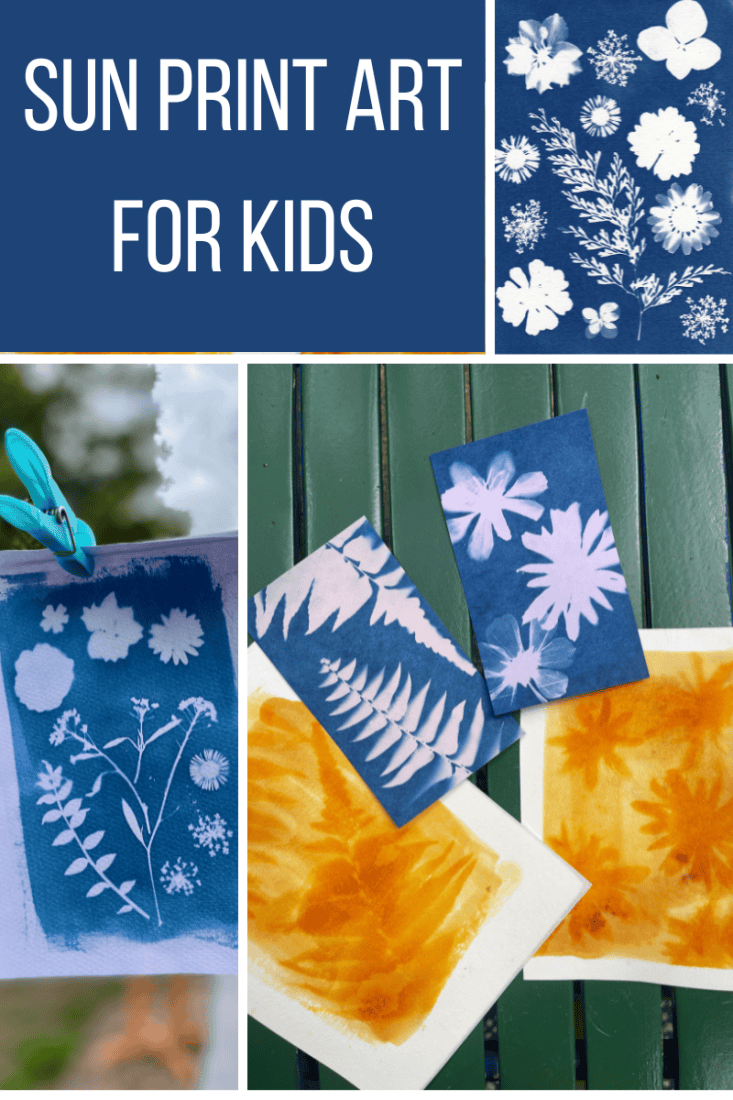
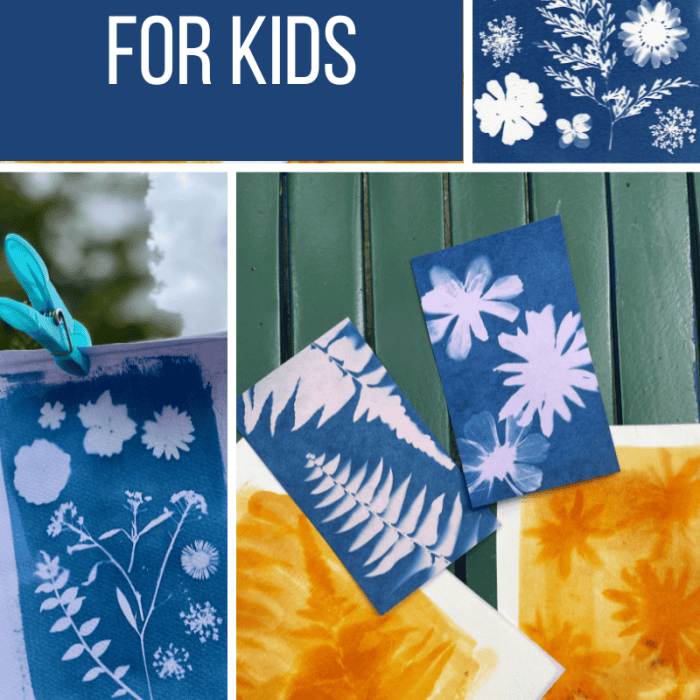
Sun print art is such a fun and easy outdoor art project for kids. Using light sensitive paper, children can create beautiful sun prints simply by placing objects on paper and letting the sun do the work.
Other names for this include sun printing, solar printing, or cyanotype sun printing is a perfect blend of art, science, and nature play, making it ideal for homeschool, classrooms, or a fun afternoon outside.
Disclosure: This post may contain affiliate links. This means I may earn a small commission at no extra cost to you if you make a purchase through these links. I only recommend products I personally use and trust.
What Is a Sun Print?
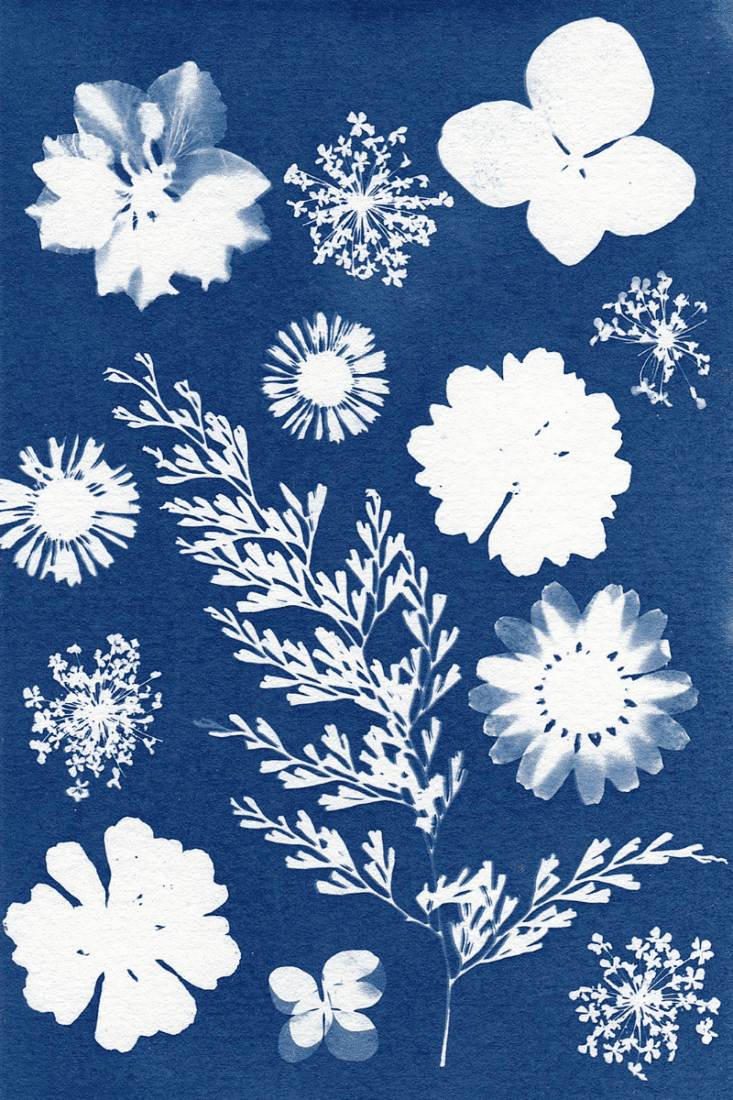
A sun print is an image created using photosensitive paper that reacts to sunlight. When objects block the sun, they leave behind light silhouettes, creating stunning blue-and-white designs.
This process is based on cyanotype prints, one of the oldest forms of photography. While traditional cyanotype printing can be more complex, sun print paper makes it incredibly simple and safe for kids.
The Science Behind Sun Prints (Kid-Friendly Explanation)
How does Sun Printing work?
Sun printing works through the cyanotype process, a 19th-century photographic method that uses light-sensitive chemicals to create images. Paper is coated with a solution containing ferric ammonium citrate and other iron salts. When exposed to ultraviolet light from the sun, a chemical reaction occurs that forms Prussian blue in the areas hit by light, while covered areas remain pale.
The History of Cyanotype Printing
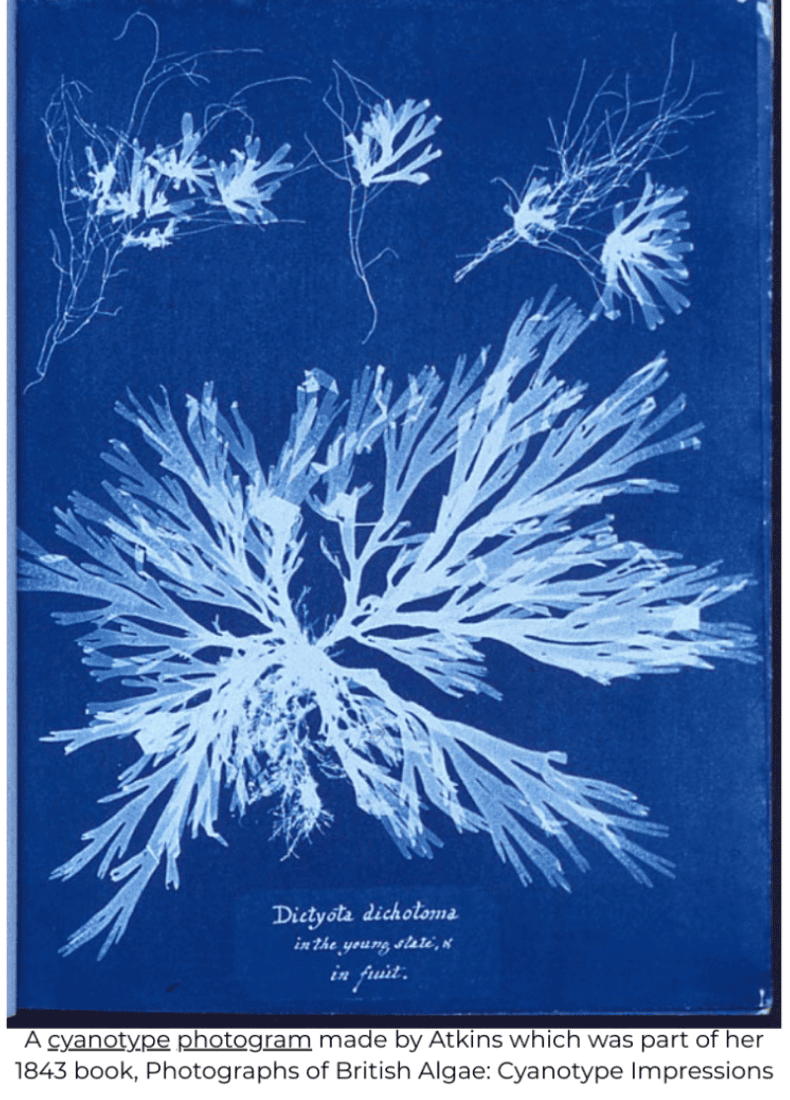
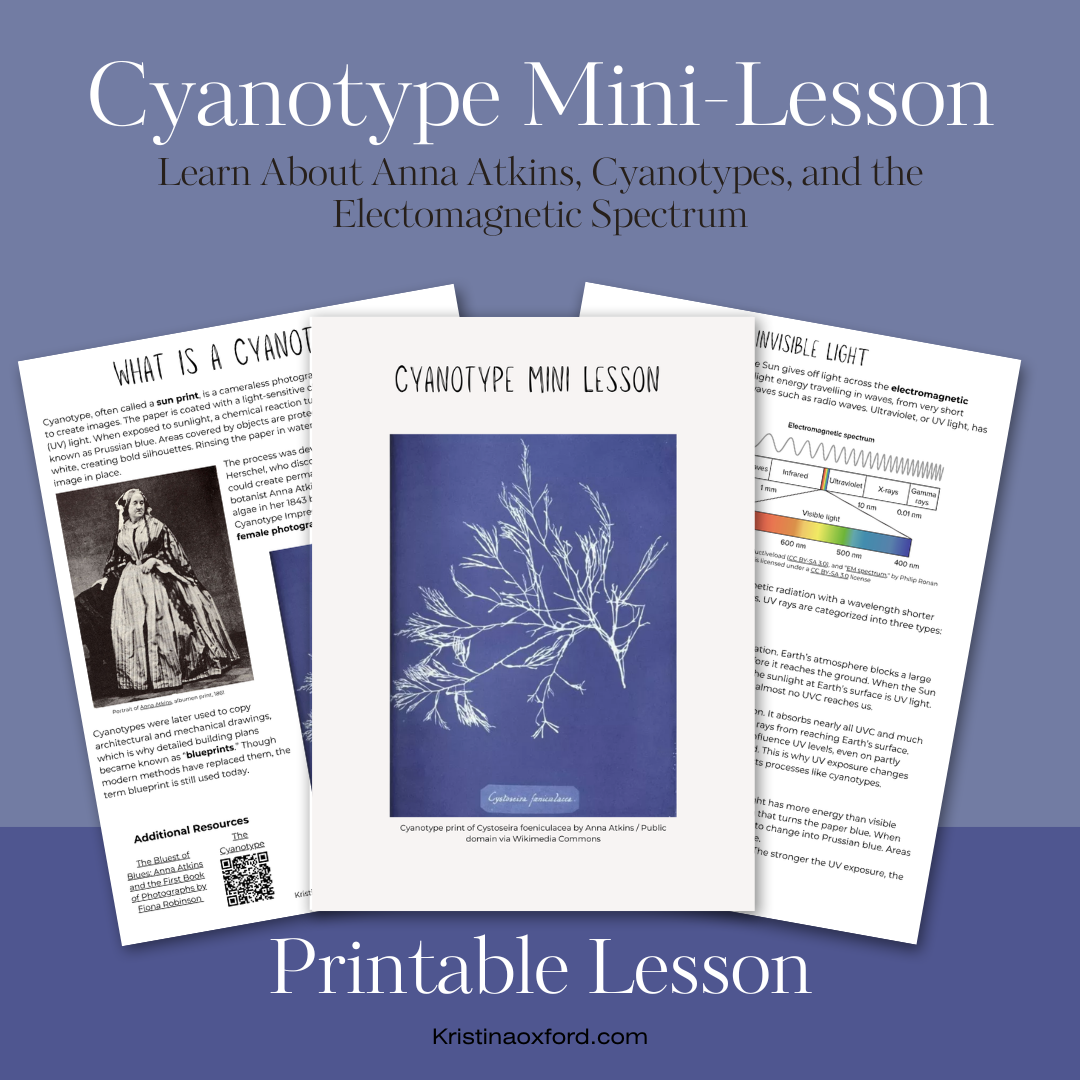
The process was developed in 1842 by Sir John Herschel, who discovered that iron salts and sunlight could produce permanent blue images. Shortly after, botanist Anna Atkins used cyanotypes to document algae in her 1843 book Photographs of British Algae: Cyanotype Impressions, becoming one of the first female photographers of the 19th century to use sunprint photography. The cyanotype blueprint became a practical way to reproduce architectural and engineering drawings.
Why Sun Printing Is the Perfect Summer Art Project
Sun printing is:
- Simple and quick
- Low-mess
- Hands-on and engaging
- A great introduction to early science concepts
- Creativity
- Observation skills
- Outdoor exploration
- Curiosity about light and shadows
Materials Needed for Sun Printing
There are two easy ways to get started with sun printing: using a ready-made kit or preparing your own cyanotype paper. Both options work well for kids and produce beautiful results.
Option 1: Sun Print Kit (Beginner-Friendly)
Sun print art kits are the easiest way to try this activity, especially if you’re new to sun printing or doing it with younger kids. Everything you need comes ready to use, and there’s very little prep involved. Because kits don’t require chemicals or mixing, they are easy and reliable.
You’ll typically need:
- Pre-coated sun print paper, which comes in the kit
- Clear acrylic sheet or plastic cover (often included)
- A shallow tray or container for rinsing
- Water
- Natural objects like leaves, flowers, or feathers
This is my recommended Sun Print Paper Kit
Option 2: Prepare Your Own Sun Print Paper (DIY Method)
If you want to explore the science of cyanotypes more deeply, you can prepare your own sun-sensitive paper at home. This option works best for older kids or families who enjoy experimenting or who will want to do multiple prints. This method can also do sun prints on fabric.
You’ll need:
- Cyanotype chemicals (ferric ammonium citrate and potassium ferricyanide)
- Water for rinsing
- Paper (watercolor paper works well)
- Foam brush or sponge
- Dark room or low-light area for coating paper
- Gloves and protective covering for surfaces
Here’s my Recommended Cyanotype Chemical Kit
Check out more activities here!


How to Make Sun Prints with Kids
Step 1: Collect Nature Items
Go on a short nature walk and gather leaves, flowers, or other flat items. Delicate flowers are a lot of fun because, depending on how long you expose the print, the sun will bleed through the delicate petals, and you will be able to see all the details. We also love to use things from inside the house, like buttons, small toys, and anything with interesting shapes.
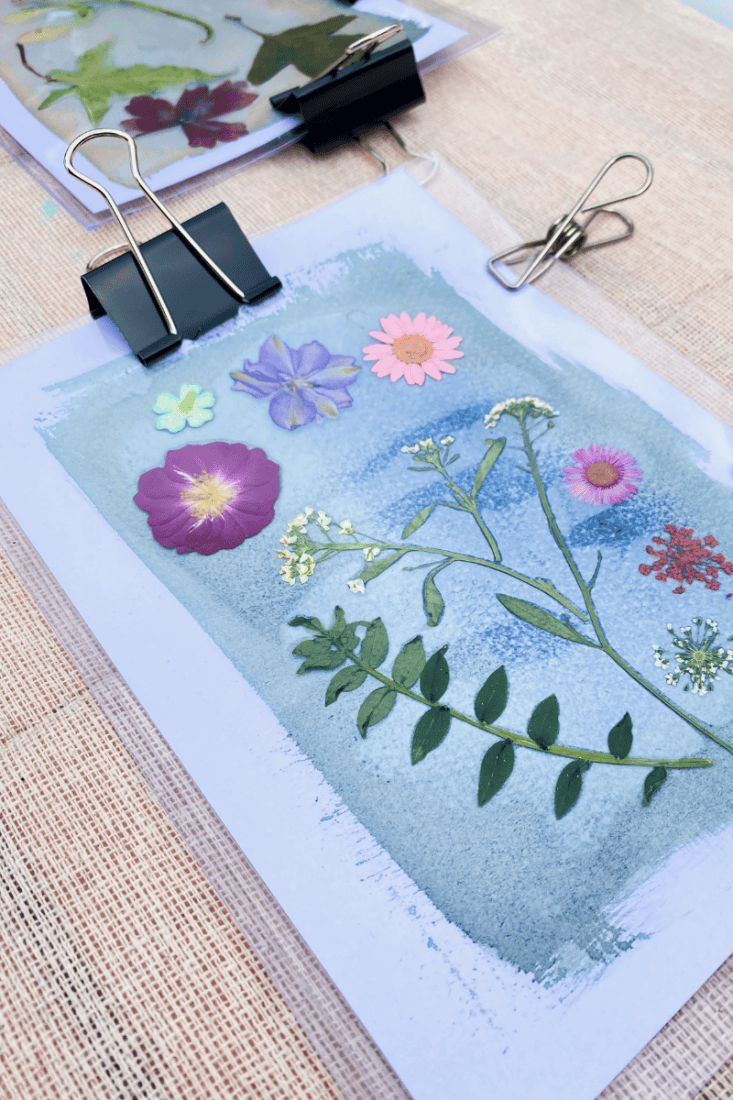
Step 2: Arrange the Design
Inside the house or a darker area away from direct sunlight, place your items on your photo-sensitive sun print paper. Make sure to put your paper on top of a cookie sheet or something similar so you will be able to move all of it to the sun easily when you are ready. If it is a breezy otside you will want to put a piece of glass or plexiglass ontop of your items to hold them down. Kids can experiment with overlapping shapes and different compositions.
Step 3: Let the Sun Work
Next, move everything into the sun and leave the paper in the sun for 2–10 minutes (depending on brightness). The paper will slowly change color as it reacts to the light. Play around with exposure time. If you have more delicate items, limiting the exposure time will bring those features out in your print.
Step 4: Rinse and Reveal the Sun Print
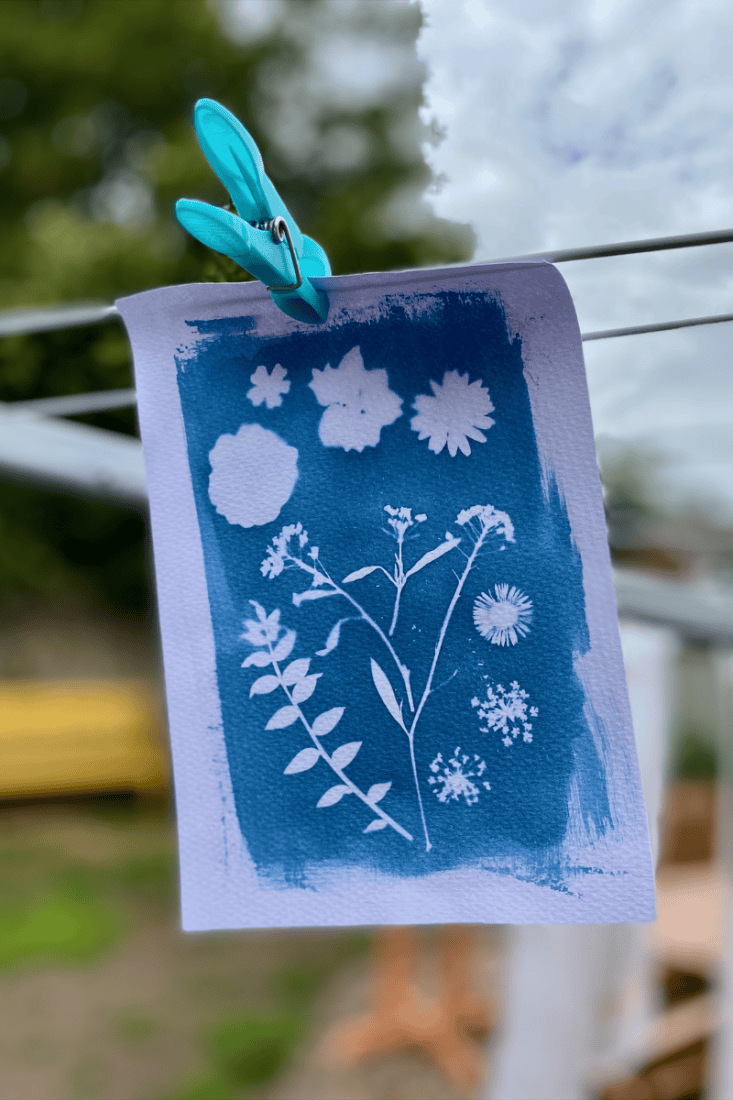
When the paper has turned white, carefully remove the objects and rinse the paper in water. The image will appear instantly, revealing beautiful sun prints.
Step 5: Optional Hydrogen Peroxide Rinse on Sun Print Art
Hydrogen peroxide can be used to speed up the sun printing process. After exposing your sun print paper to sunlight, place the print in a shallow tray of diluted hydrogen peroxide, which causes the image to develop almost instantly. The blue color deepens right before your eyes, which makes this step especially exciting for kids to observe.
After that let the prints dry flat and then decorate your home with them.
Easy Sun Print Art Ideas for Kids
Here are a few fun ways to extend the activity
- Create a nature collage with multiple sun prints
- Label leaves to make a simple nature identification project
- Turn sun prints into greeting cards or bookmarks
- Add sun prints to a science or art notebook
Cyanotype Printing on Fabric
Sun Printing on Fabric
The cyanotype process isn’t limited to paper. It can also be used on natural fabrics such as cotton, linen, or silk. When fabric is coated with the light-sensitive solution and exposed to sunlight, the same chemical reaction occurs, producing rich Prussian blue tones with white silhouettes where objects block the light.
Fabric cyanotypes create beautiful, permanent designs that can be used for tote bags, napkins, wall hangings, or quilt squares. Just like paper prints, the fabric must be rinsed in water after exposure to stop the reaction and reveal the final image.
Because fabric absorbs the solution differently from paper, exposure times may vary, making this an excellent opportunity for experimentation.
Cyanotypes vs Anthotypes
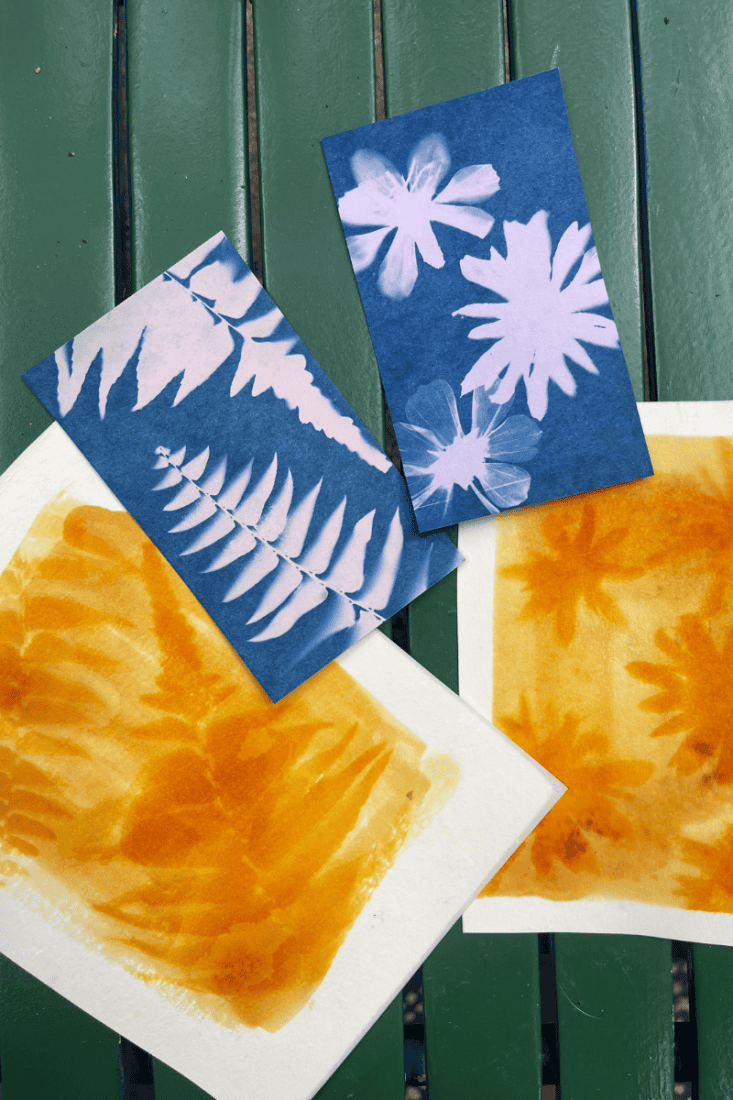
While cyanotypes use iron salts and ultraviolet light to create permanent Prussian blue images, anthotypes use natural plant pigments such as spinach, berries, or turmeric. Anthotypes also rely on sunlight, but instead of forming a blue chemical reaction, the sun slowly fades the plant dye in exposed areas.
Cyanotypes develop quickly and are long-lasting, while anthotypes take longer to expose and may fade over time. Both processes are examples of cameraless photography and provide hands-on ways to explore light, chemistry, and art.
Cyanotype & Sun Print FAQ
Tips for Successful Sun Printing
- Use flat objects for clear shapes
- Make sure the paper stays in direct sunlight
- Work quickly. Photosensitive paper reacts fast
- Store unused paper in a dark envelope
Why Isn’t My Cyanotype Turning Blue?
- Not enough UV exposure
- Paper expired
- Weak chemical mixture
- Cloudy weather
- Not rinsed long enough
Is Cyanotype Solution Toxic?
While the cyanotype solution is not highly toxic, if you are mixing the cemicals it should be done in a well-ventilated place and with gloves on.
Is Cyanotype safe for kids?
The sun print paper kits are extremely safe for children. If you are going to be mixing the chemicalsthere should always be adult supervision.
How long do cyanotypes need in the sun?
Typically between 2-30 minutes. The amount of time needed in the sun will depend on the time of day and the strength of the UV.
Can you make cyanotypes on cloudy days?
Yes, you can make cyanotypes on a cloudy day. The UV rays still penetrate through the clouds, but it may take longer depending on the cloud cover.
Do cyanotypes fade?
Yes, over time, if a cyanotype is kept in direct sunlight they will fade or yellow. Faded cyanotypes can be corrected with a diluted hydrogen peroxide bath.
What paper works best for cyanotypes?
Thick, cold-pressed watercolor paper will work the best for cyanotypes.
Can you make Sun Print Art in winter?
Yes, you can make cyanotypes in the winter, but your exposure time will be different in the summer. Try to shoot for a noon-time exposure when the UV for the day is at its highest.
Final Thoughts on Sun Print Art for Kids
Sun printing is one of those rare activities that feels both creative and educational without being complicated. Whether you call it solar printing, sun print art, or cyanotype prints, kids will love watching their designs appear through the power of the sun.
If you’re looking for an easy, beautiful way to combine art, science, and nature, sun prints are a must-try activity for kids of all ages.
This looks like so much fun! I’m always trying to think of activities to do with my kids. I’ll have to try this out with them!! 🙂
This looks like so much fun!!! Can’t wait to try with my kiddos!