
Seed Germination Experiments for Kids (Hands-On Science Activities)
Seed germination experiments are such a fun way to introduce kids to hands-on science. These experiments are easy to set up, use simple materials, and work well at home or in the classroom. Whether you’re working with preschoolers, elementary-aged kids, or older, these experiments can be expanded to any age. From classic seed-in-a-jar experiments to full germination lab activities, kids will explore how seeds grow, what they need to survive, and how plants begin their life cycle.
What Is Seed Germination?
Seed germination is the process where a seed begins to grow into a new plant. When a seed has the right conditions for germination (water, temperature, light, and oxygen), it activates and begins growing roots and shoots. This makes germination of seeds a perfect topic for experiments, because kids can clearly see cause and effect over time.
Best Seeds for Germination Experiments
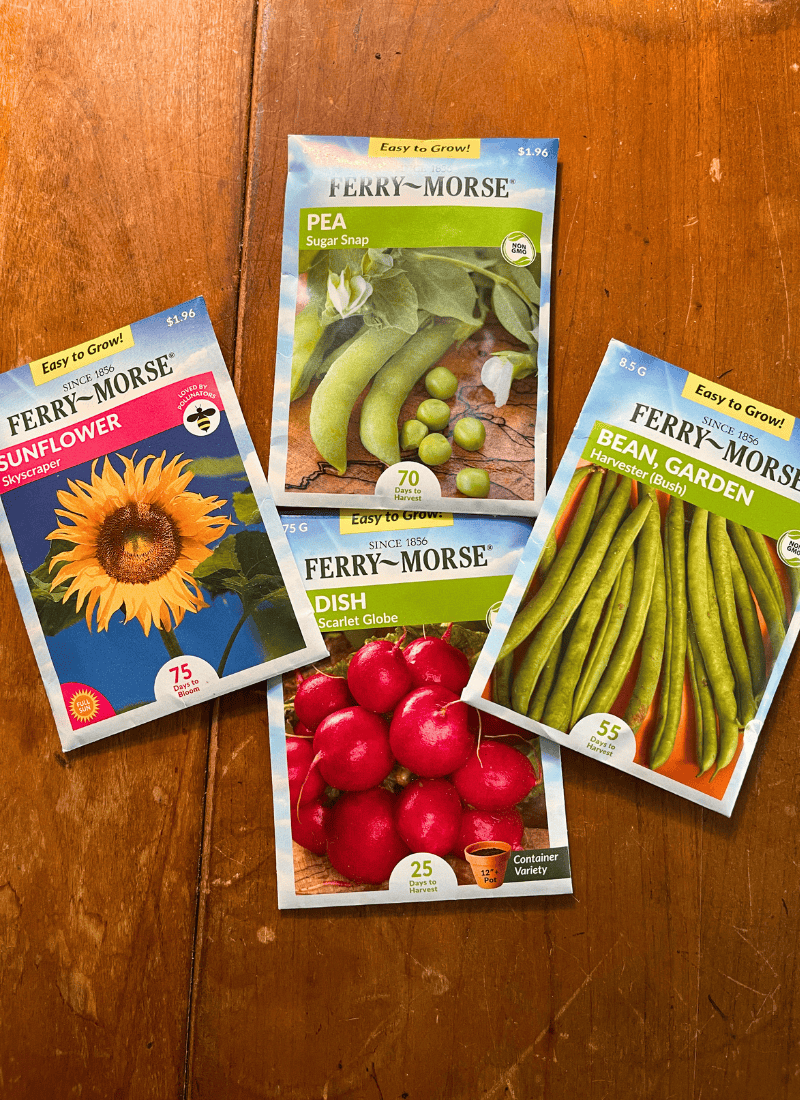
- Beans-Beans typically germinate in 7–10 days and should be planted about 1 inch deep in moist, well-draining soil.
- Peas-Peas germinate in 7–14 days and grow best when planted 1 inch deep, especially in cooler soil.
- Radish– Radish seeds germinate quickly in 3–5 days and only need to be planted ½ inch deep
- Sunflower– Sunflower seeds usually germinate in 7–10 days and should be planted 1–1½ inches deep for strong root support
Stages of Seed Germination
- The seed coat splits, and the first root appears. This is called the radicle.
- As the radicle grows down into the soil, it develops secondary roots branching out into the soil for stability. The radicle is now called the taproot.
- The first leaves that appear are called Cotyledons. They supply the plant with nutrients to grow.
- Last, the first leaves appear, which can now carpture sun light and carryout photosynthesis.
Why kids should study Seed Germination
- This is an activity where kids can observe changes over multiple days. There will even be changes from morning to night
- They can practice recording data and making predictions
- Learn early biology and plant science concepts
Easy Seed Germination Experiments for Kids
These activities can be adapted for different ages, making them great seed activities for preschoolers, kindergarten, and older kids. You can adapt all of these activities to the age of your child.
Seed Germination Experiment Lab Report (Elementary-Friendly)
For elementary students, turning experiments into a lab report builds science and writing skills. This is a great way to introduce a seed germination lab report without being too much for kids. You can make this as detailed as you want, depending on the child’s age.
Include things like:
- Question: What helps seeds germinate? Which type of seed will germinate first?
- Hypothesis: What do you think will happen? Does a seed need water to germinate?
- Materials list.
- Procedure: Kids can practice the order of events by writing down exactly what they did to set up the experiment.
- Observation: Kids should observe and record their observations of the seed germination day by day with notes and drawings
- Conclusion: What did they end up discovering?
More Activities Here

Seed Germination in a Jar Experiment
The Seed in a Jar experiment is one of the most popular seed germination activities for kids. It allows children to see every stage of germination clearly. This is an ideal seed germination activity for preschoolers and kindergartners, especially when paired with drawings instead of written observations.
Materials:
- Clear jar or cup
- Paper towel or cotton pads
- Seeds (beans, peas, sunflower seeds work well)
- Water
- Optional Plastic Wrap
Seed Germination Experiment Steps
Step 1. Put paper towel inside the jar
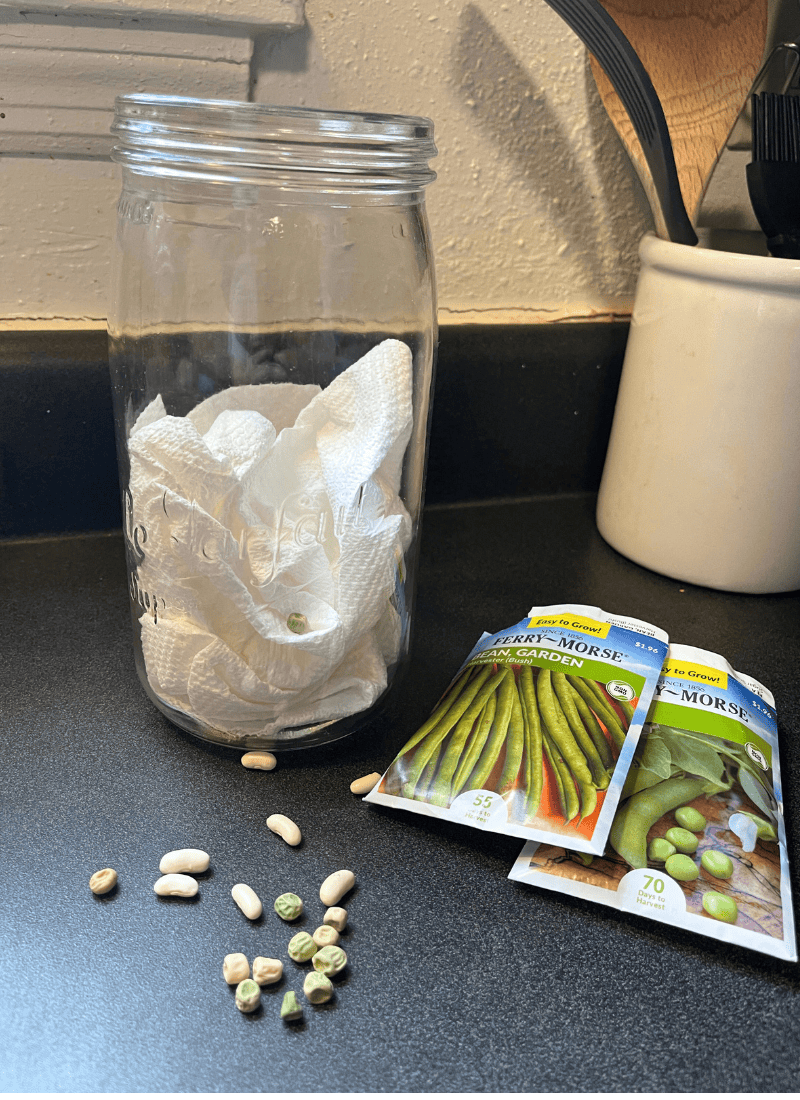
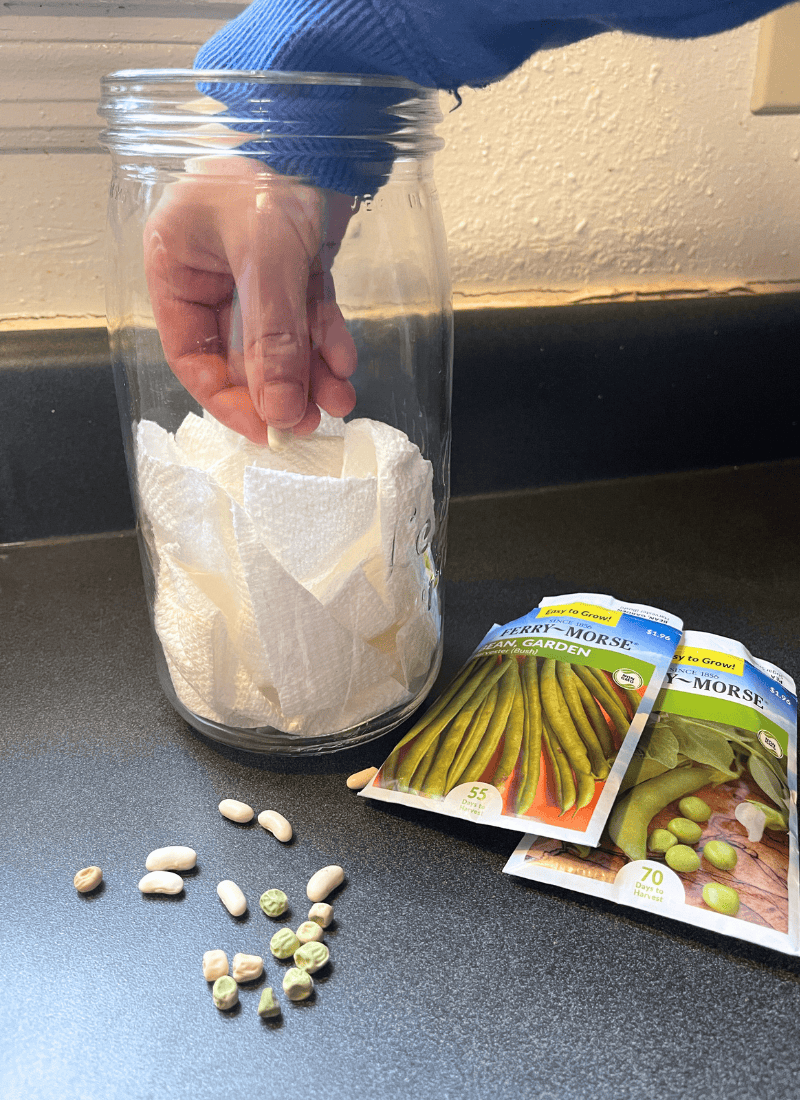
Step 2. Place seeds between the paper towel and the glass.
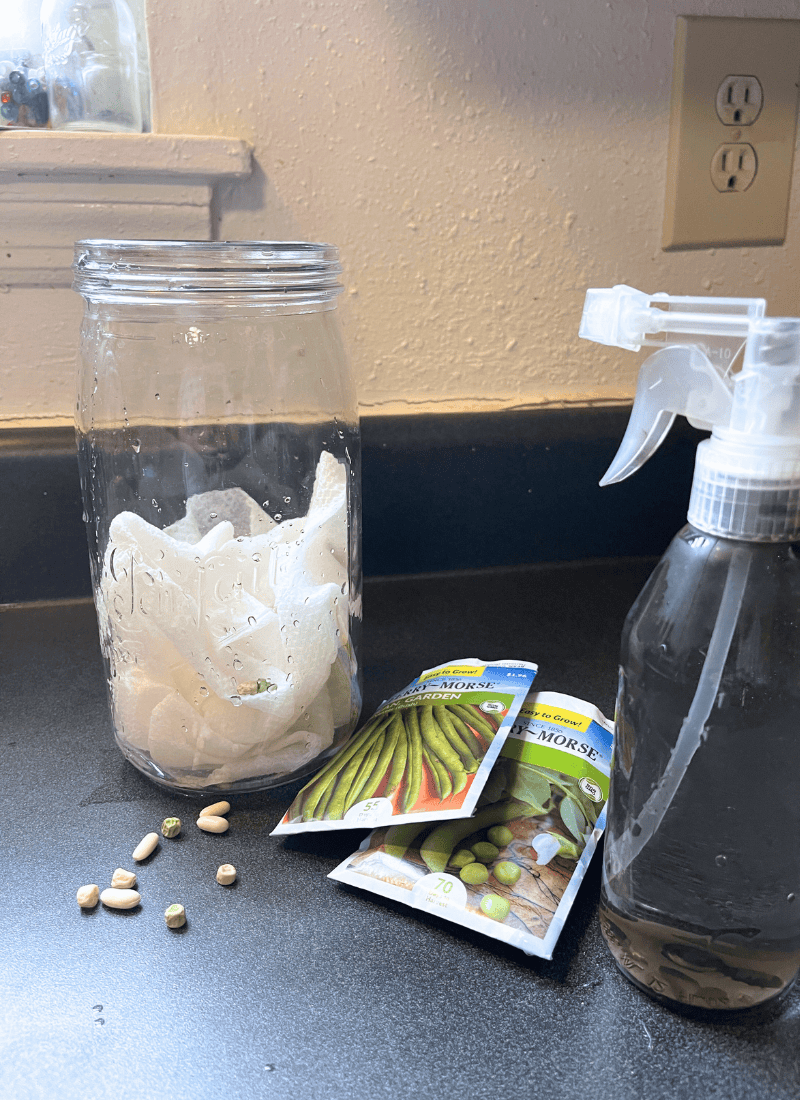
Step 3. Spray the towel and seeds with water and place the jar in a warm, sunny spot.
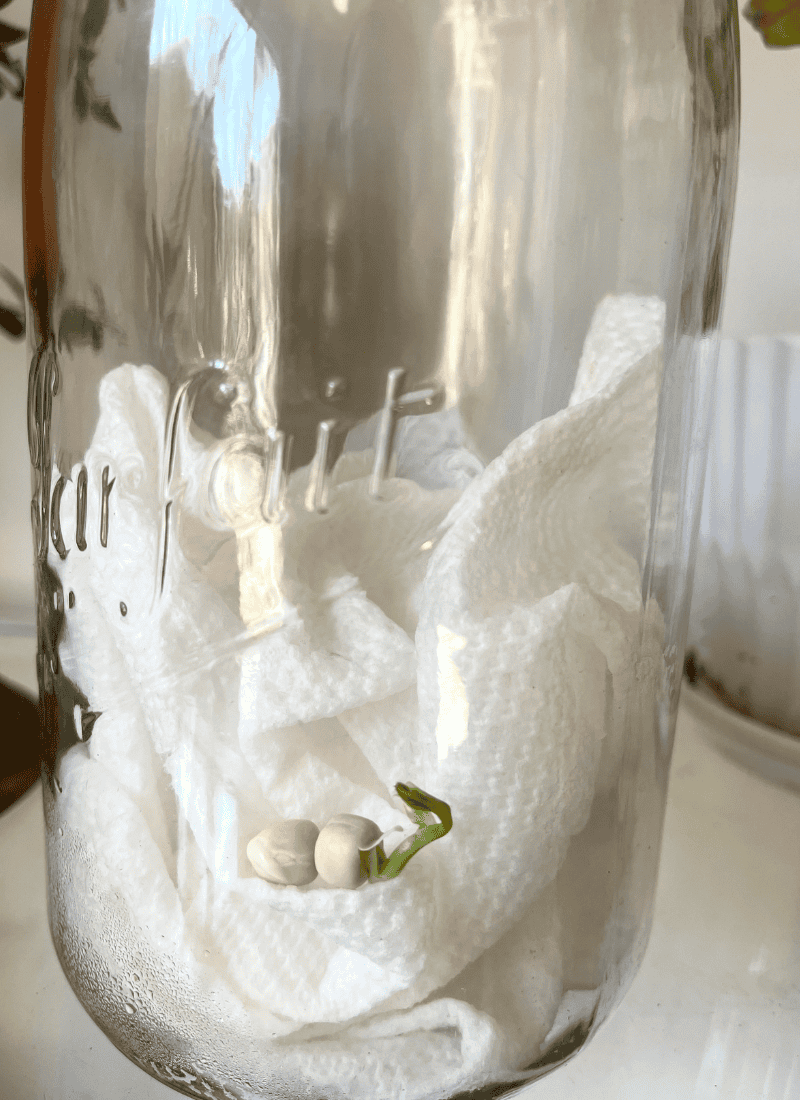
Step 4. Observe daily as roots and shoots appear.
Germination Lab: What Do Seeds Need to Grow?
This germination lab experiment is perfect for upper elementary and middle school-aged kids. It helps kids discover what conditions seeds need by testing one variable at a time.
Materials:
- Seeds
- Cups or containers with holes in the bottom
- Paper towels or soil
- Water
How to set up your Seed Experiment
The way I like to set up this activity is to put a few different types of seeds in each cup for each condition. Kids observe which seeds sprout in which conditions and which do not. For the ones that do sprout, kids can take measurements to see which one grows faster.
- One seed with water and sunlight
- One seed with sunlight and no water
- One seed kept in the dark with water
- One seed kept in the dark with no water
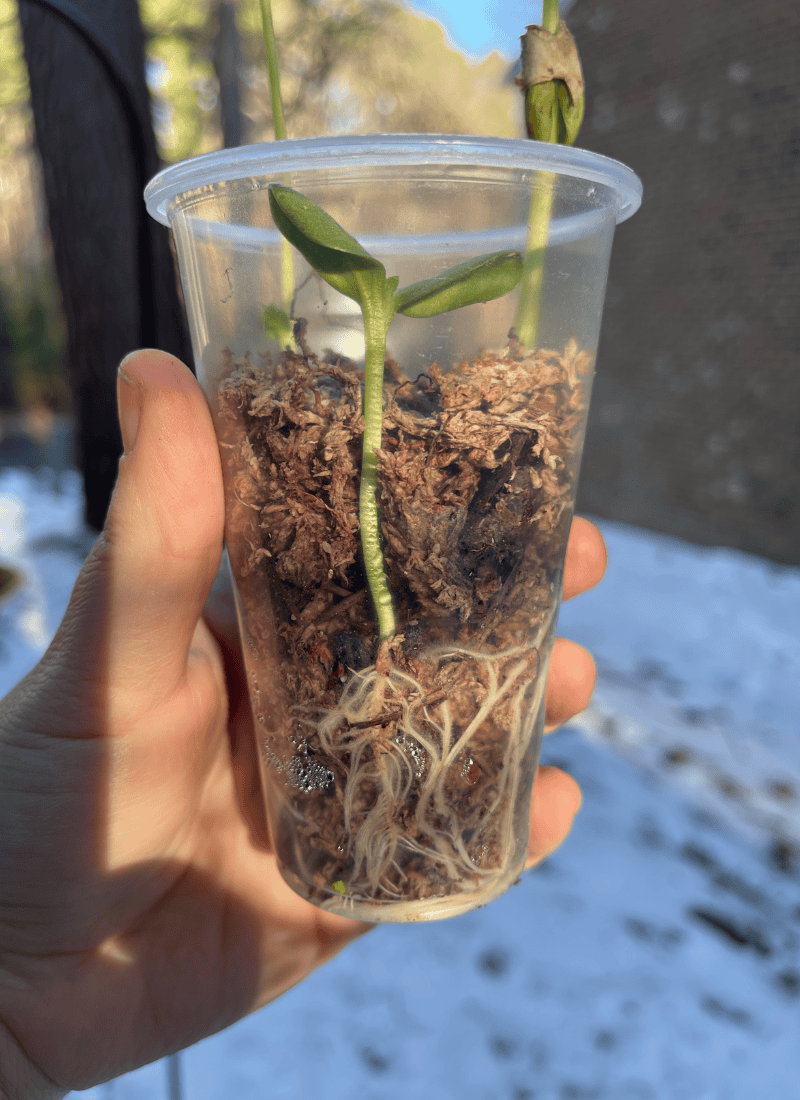
Experiment on Seed Germination: Different Media
This experiment compares how seeds grow in different environments. The experiment clearly shows how growing conditions affect plant development and works well as a seed germination science project.
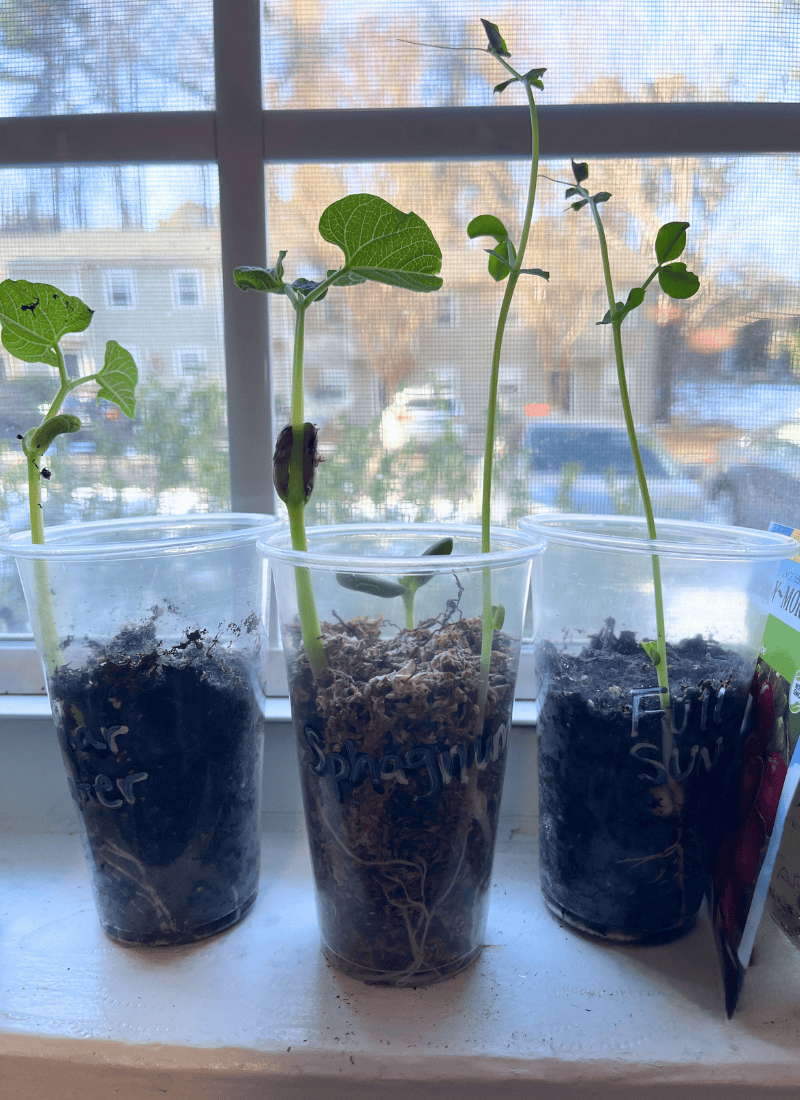
- Potting Soil– Potting soil holds moisture, provides nutrients, and allows airflow, making it one of the best environments for seed germination.
- Sand-Sand drains quickly and lacks nutrients, which can cause seeds to dry out and struggle to grow.
- Sphagnum Moss– Sphagnum Moss holds a lot of moisture and helps seeds germinate quickly, but it does not provide nutrients for long-term growth.
- Outside Dirt– Outside dirt varies in texture and nutrients, which can lead to unpredictable germination results.
- Clay– Clay soil holds water tightly and limits airflow, making it difficult for roots to grow and seeds to sprout.
- Coco Coir– Coco Coir retains moisture while allowing airflow, supporting germination but requiring added nutrients for continued growth.
Germination of Seeds Activity: Water Amount Test
This is an easy experiment and perfect for the kid who wants to water their plants all day long. Kids can quickly see that too much water can be just as harmful as too little. You can make this a very precise experiment by measuring out the exact amount of water you will give and when to give it.
Test different watering amounts:
- No water
- Light water
- Heavy water
Radish Seed Experiment
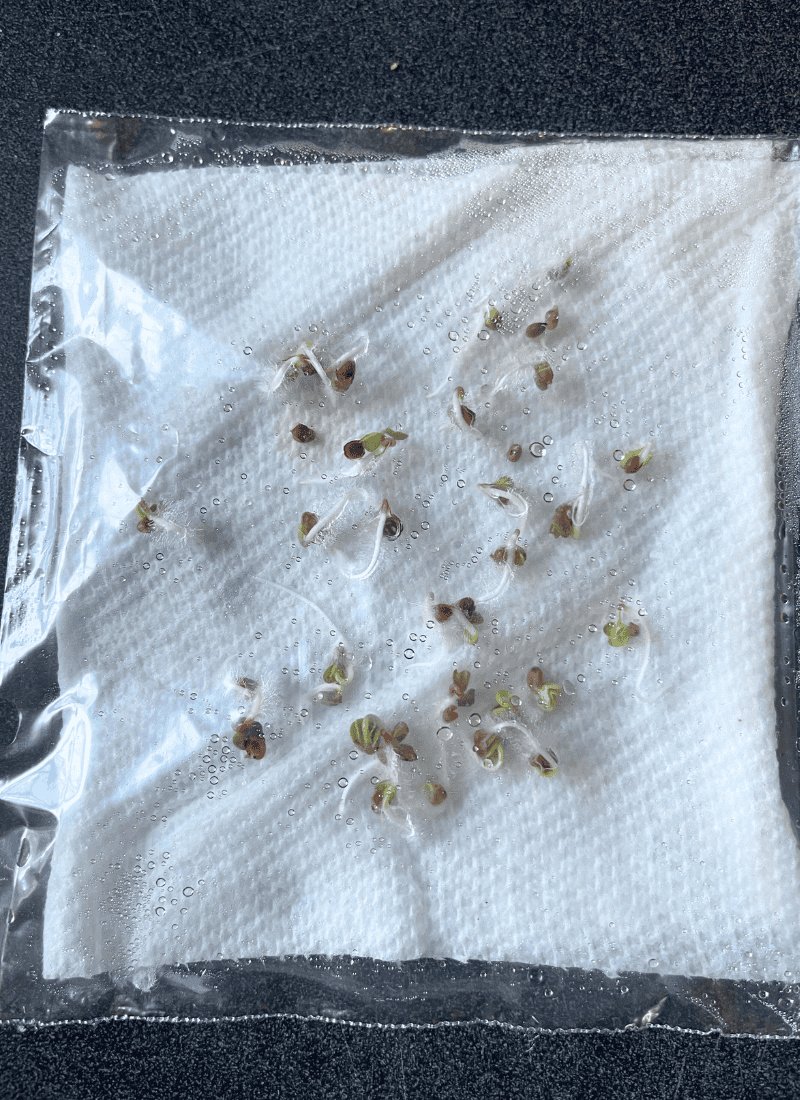
This experiment is so easy, and the results happen fast! All you need is a wet paper towel, some radish seeds, and a ziplock bag. These seeds sprouted in 2 days. You can’t see the parts of germination as well as with larger seeds like beans, but with this seed germination experiment, you can test out many different theories fast. Like, do radish seeds germinate in Dr. Pepper? Here’s a whole list of raish seed experiments from the Chicago Botanic Garden.
Germination Activity for Preschoolers: Sprout & Observe
- Sprouting seeds in clear cups with the seed up against the side of the cup so they can easily see each stage of growth
- Take daily observations with drawings of what they see
- Comparing dry seeds vs sprouted seeds
- Make art with your leftover seeds or create a sensory bin
Seed Activities for Kindergarten: Comparing Seed Types
Different seeds germinate at different speeds. This works well for seed activities for kindergarten and builds early comparison skills.
- Which seed sprouts first
- Measure the root length
- Measure and look at the differences in leaf size
- Compare the seed size difference
Turning Seed Germination Experiments Into a Science Project
Seed germination experiments easily become a seed germination science fair project by focusing on one question:
- Does light affect germination?
- Does seed size matter?
- Does water temperature change results?
- Does signing to your plants make them happier?
Why Seed Germination Experiments Are Perfect for STEM Learning
Seed germination experiments are open-ended, low-cost, and adaptable for many ages. Seed germination activities naturally include so many subjects like:
- Science (biology and life cycles)
- Technology (photos, apps, time-lapse videos)
- Engineering (experiment setup)
- Math (measuring growth, counting days)
Frequently Asked Questions About Seed Germination Experiments
What age are seed germination experiments for?
Seed germination projects can be adapted for all ages. Preschoolers can focus on observation, while older kids can complete lab reports, graph data, and come up with their own experiments.
How long does seed germination take?
Most seeds sprout within 3–7 days, depending on seed type and conditions.
Extend Learning with More Seed Activities
Seed germination experiments pair well with:
- Plant life cycle studies
- Garden planning
- Nature journaling
- Seed dispersal activities
- Read books about seeds and plants

What a great learning activity for kids! 🩷
This is such a fun idea.
I love this! I love the hands on experiments! This will be so good for homeschooling. Excited to do it!
So cool! Perfect for homeschool 😊.
Used to garden as a kid with my grandpa but forgot all his seedling tips and tricks. Will be using this in my garden!