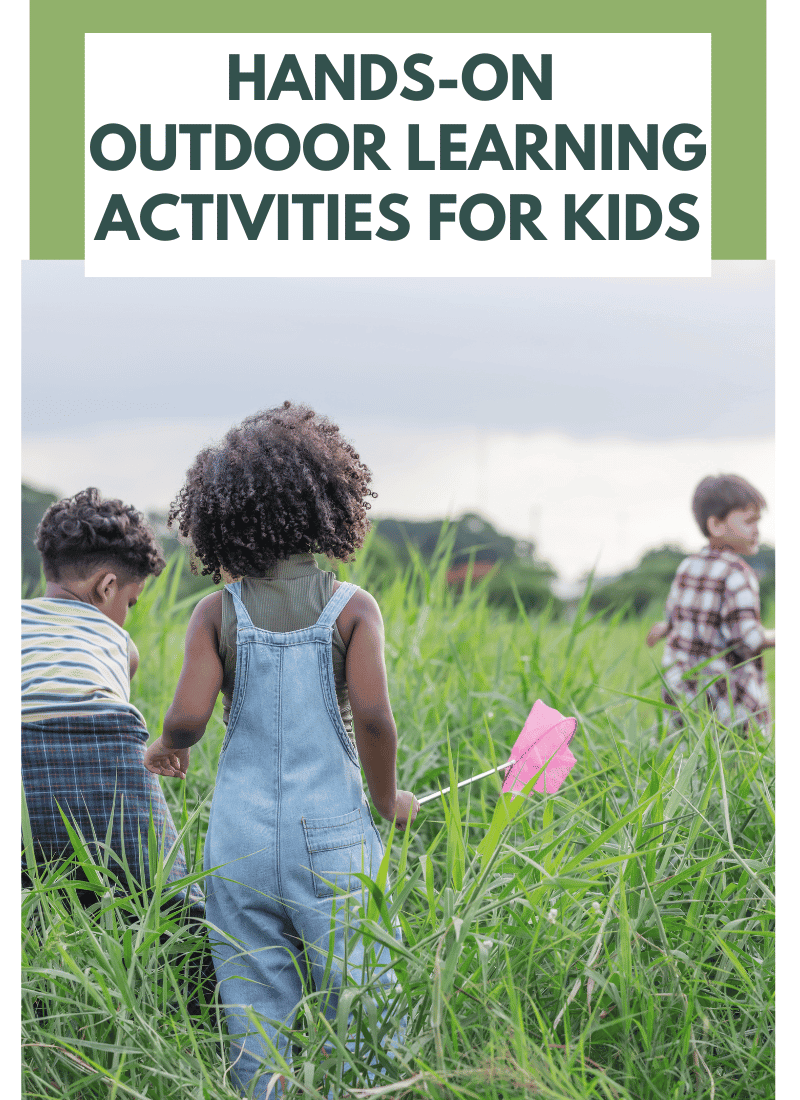
Outdoor learning activities for kids turn time outside into meaningful lessons. Nature sparks curiosity, encourages movement, and offers endless chances to explore. Whether observing insects, gathering leaves, building with sticks, or cloud-watching, the outdoors becomes a hands-on classroom of discovery.
These outdoor learning activities are easy, engaging, and adaptable for various ages. Using simple materials and natural settings, each helps children build creativity, problem-solving, and a deeper connection with nature through play.
Why Outdoor Learning Activities Matter for Kids’ Development
Outdoor learning activities support many areas of child development. Exploring nature encourages curiosity, independence, and critical thinking while also strengthening motor skills and sensory awareness. When kids regularly spend time observing and interacting with the natural world, they develop a deeper appreciation for nature and a stronger connection to their environment.
Benefits of Outdoor Learning Activities
Outdoor learning provides many benefits for children’s development. Spending time outside encourages physical activity, improves focus, and supports creativity and problem-solving skills. Nature also offers endless opportunities for hands-on discovery, helping kids build observation skills and develop a deeper understanding of the environment around them
Nature Observation Outdoor Learning Activities
Sit Spot Practice
A sit spot is a quiet outdoor location that kids return to regularly to observe the natural world. By visiting the same spot each week, children can notice small changes in the shifting seasons. This outdoor learning activity helps build patience, observation skills, and a deeper connection to nature over time.
Signs of the Season Hunt
Go outside and observe how nature changes with the seasons. Kids can look for signs like budding plants, blooming flowers, leaves turning, and the types of insects or animals that are active. By visiting the same outdoor location regularly and drawing pictures or writing notes about the changes they see.
Outdoor Cloud Watching Learning Activities
Cloud watching is a simple outdoor learning activity that encourages kids to slow down and observe the sky. Watching the clouds, children can identify different cloud types, notice how fast or slow they move, and observe how the shapes change over time. This activity introduces basic weather science.
Sunset Observation
As the sun lowers in the sky, children can notice how the colors change, how the light shifts, and how the landscape looks different as evening approaches. This outdoor learning activity encourages observation skills and can spark conversations about Earth’s rotation, daylight, and the changing sky.
Nature Sound Mapping
Nature sound mapping helps kids slow down and listen carefully to the sounds around them. Start by writing “me” in the center of a piece of paper. Each time a child hears a sound like birds chirping, wind in the trees, or insects buzzing, they can mark the sound on the paper in the direction it came from. This outdoor learning activity builds listening skills, awareness of the environment, and encourages kids to pay closer attention to the natural world.
Nature Journaling
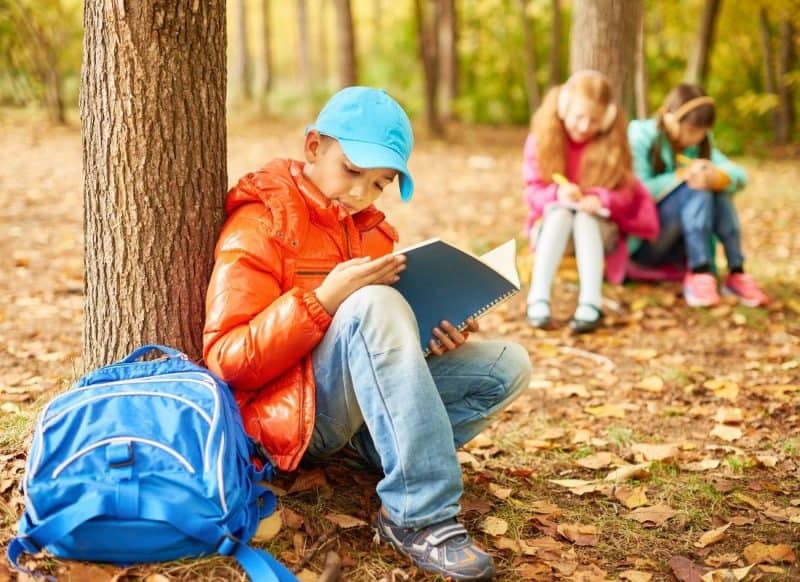
Nature journaling encourages kids to record their outdoor discoveries through drawings, notes, and observations. Children can sketch plants, insects, clouds, or landscapes while writing down what they notice. Over time, journals become a record of seasonal changes and scientific observations.
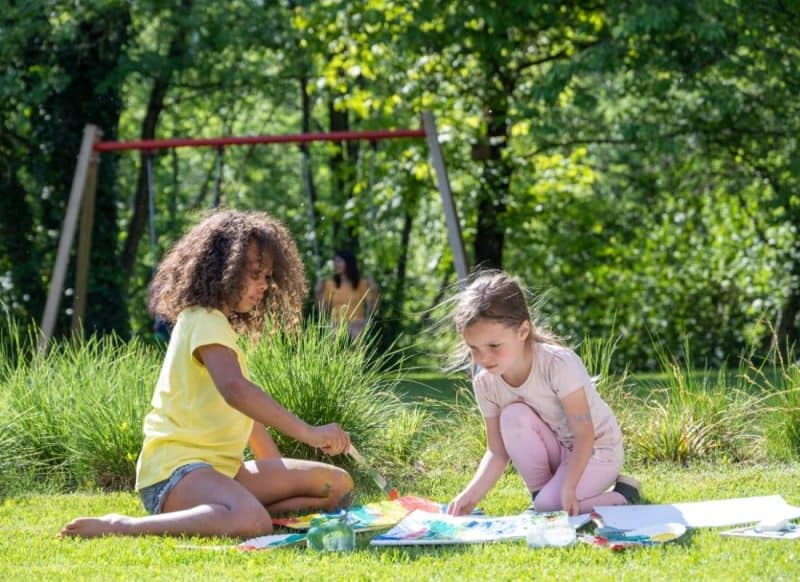
Backyard Outdoor Learning Activities
Bug Investigation Station
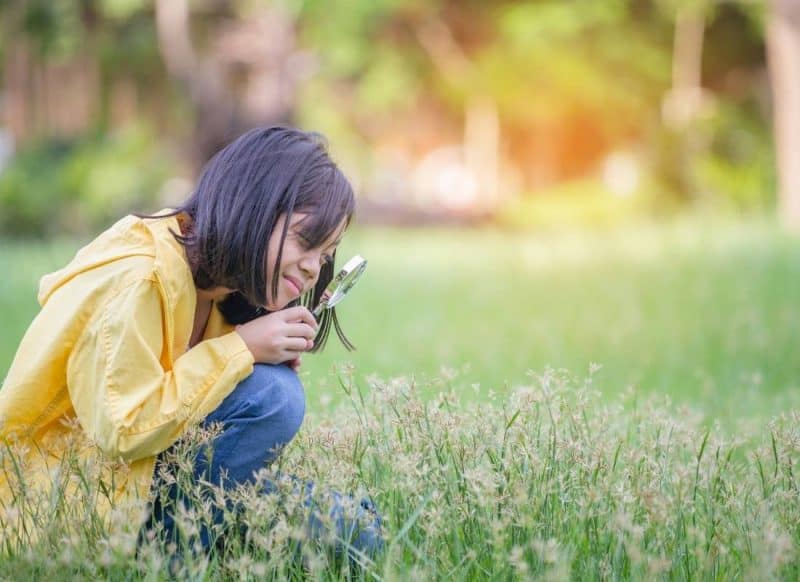
A bug investigation station is a great way to introduce kids to science through outdoor exploration. Create a simple basket with tools like magnifying glasses, small nets, and clear jars so children can safely observe insects up close before releasing them. As kids search for bugs, they can notice different colors, body shapes, and behaviors, turning curiosity about insects into a hands-on outdoor learning experience.
Bird Watching Log
Bird watching is a simple outdoor learning activity that helps kids develop observation and patience. Children can keep a bird watching log where they record the birds they see, noting details like colors, size, sounds, and behaviors. Over time, kids may start to recognize common local birds and notice patterns in when and where different species appear. A fantastic free bird identification app is Merlin.
Tree Identification Walk
A tree identification walk encourages kids to take a closer look at the trees around them. As children explore outdoors, they can examine leaf shapes, bark textures, and seeds to help identify different types of trees. This activity builds observation skills and helps kids learn more about the plants that grow in their local environment.
Soil Exploration Dig
Soil exploration invites kids to dig into the ground and discover what lives beneath the surface. Using a small shovel or garden trowel, children can investigate layers of soil and look for things like roots, rocks, worms, and insects. This hands-on outdoor activity introduces basic earth science while helping kids understand how soil supports plant and animal life.
Pollinator Search
A pollinator search encourages kids to observe the insects that help plants grow and reproduce. As children explore outdoors, they can look for pollinators like bees, butterflies, and even flies visiting flowers. This outdoor learning activity helps kids understand the important role pollinators play in ecosystems while building observation skills.
Citizen Science
Citizen science projects allow kids to contribute to real scientific research while exploring the outdoors. Children can observe plants, animals, weather, or insects and record their findings to share with larger research projects. Participating in citizen science helps kids see how everyday observations can support real scientific studies and deepen their connection to nature.

Earth Science Outdoor Learning Activities
Rock Sorting + Classification Outdoor Learning Activities
Rock sorting is a hands-on outdoor learning activity that introduces kids to basic geology. Children can collect rocks and sort them by characteristics such as texture, hardness, size, and color. This simple investigation encourages observation skills and helps kids begin to understand how scientists classify and study different types of rocks.
Erosion Demonstration in a Sandbox
An erosion demonstration helps kids see how water can shape the land. Using a sandbox or small mound of soil, children can slowly pour water and watch how the soil moves, creating small channels and patterns. This outdoor science activity shows how erosion works and helps kids understand how rivers and rainfall change landscapes over time.
Creek Exploration
Exploring a creek gives kids the chance to investigate how water shapes the natural world. Children can observe how fast the water is flowing, look for different sizes of rocks and sediment, search for aquatic insects or small animals, and notice how water moves around obstacles. Kids can also compare shallow and deep areas, build small dams with rocks( make sure you remove any dams you create before you leave), or watch how leaves and sticks travel downstream. This hands-on outdoor learning activity introduces concepts like water flow, erosion, and freshwater ecosystems while encouraging curiosity and exploration.
Make a Weather Station
Creating a simple weather station allows kids to observe and track daily weather conditions. Children can measure rainfall with a rain gauge, record temperature, observe cloud types, and note wind direction. This outdoor learning activity encourages regular observation and helps kids understand how scientists collect and study weather data over time.
Plant and Gardening Outdoor Learning Activities
Seed Dissection
Seed dissection helps kids explore how plants begin to grow. By carefully opening a large seed like a bean or sunflower seed, children can observe the different parts inside that help the plant develop. This outdoor learning activity introduces basic plant biology while encouraging curiosity about how seeds turn into plants.
Grow Beans in a Jar
Growing beans in a jar is a simple way for kids to observe the early stages of plant growth. By placing a bean seed against the side of a clear jar with a damp paper towel, children can watch the seed sprout roots and stems over time. This outdoor learning activity helps kids understand germination and how plants begin to grow. Check out the full post on Seed Germination Experiments.
Build a Pollinator Garden
Creating a pollinator garden encourages kids to help support bees, butterflies, and other important insects. Children can plant flowers that provide nectar and observe which pollinators visit the garden throughout the season. This outdoor learning activity helps kids understand how plants and pollinators depend on each other in nature.
Seed Collecting Walk
A seed collecting walk encourages kids to explore how plants spread and reproduce. As children walk through a yard, park, or trail, they can search for different types of seeds such as acorns, maple helicopters, or seed pods. This outdoor learning activity helps kids notice how seeds travel and introduces basic concepts about plant life cycles.
Here’s more Outdoor Learning Activities
- How to Start a Garden With Toddlers
- 40 Spring STEM Activities
- Seed Germination Experiments
- Sun Print Art for Kids
Math Outdoor Learning Activities
Measure Tree Circumference
Measuring the circumference of a tree is a simple outdoor learning activity that introduces kids to math and nature at the same time. Using a measuring tape or string, children can measure the distance around the tree trunk and compare different trees they find. Kids can also estimate the age of the tree based on its size and learn how scientists study tree growth.
Nature Graphing (Leaf Types, Colors)
Nature graphing helps kids turn outdoor observations into simple math and data skills. As children explore outside, they can collect or observe things like different leaf shapes, colors, or types of plants and record their findings using tally marks or charts. This activity encourages careful observation while introducing basic graphing and data collection.
Outdoor Scavenger Hunt with Coordinates
An outdoor scavenger hunt with coordinates introduces kids to basic mapping and navigation skills. Create a simple map of a yard, park, or outdoor space and mark locations using coordinates or grid references. Kids can then follow the map to search for hidden objects or natural features while learning how maps help us understand and navigate places.
Estimation Walk
An estimation walk turns an ordinary walk into a fun math challenge. As children move through the neighborhood or yard, they can estimate distances or quantities, such as guessing how many steps it will take to reach the mailbox, a tree, or the end of the driveway. After estimating, kids can count their steps to compare their predictions and practice measurement and estimation skills.
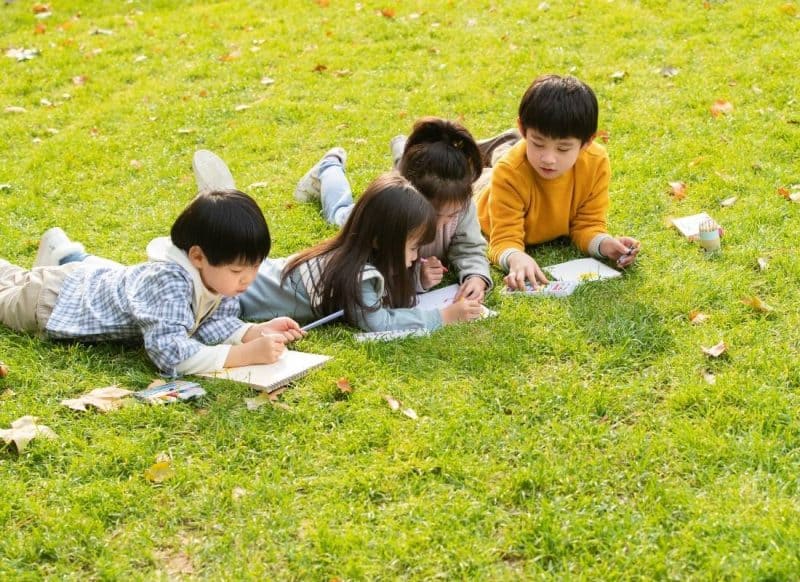
Creative Outdoor Learning Activities
Nature Mandalas
Nature mandalas combine art and observation by using natural materials to create symmetrical designs. Kids can gather leaves, flowers, stones, sticks, and other items they find outdoors and arrange them in repeating patterns or circular shapes. This outdoor learning activity encourages creativity while helping children explore concepts like symmetry, patterns, and design.
Outdoor Poetry Writing
Writing poetry outdoors encourages kids to slow down and notice the details of the natural world. Children can observe what they see, hear, and feel around them and use those experiences as inspiration for simple poems. This activity blends outdoor learning with creative writing while helping kids build descriptive language and observation skills.
Leaf Rubbing Art
Leaf rubbing is a simple art activity that requires very little setup and only a few supplies. Kids place a leaf under a piece of paper and gently rub over it with a crayon or pencil to reveal the veins and texture of the leaf. Younger children enjoy seeing the patterns appear, while older kids can collect their rubbings and create a nature journal or a leaf identification book.
Sun Print Art
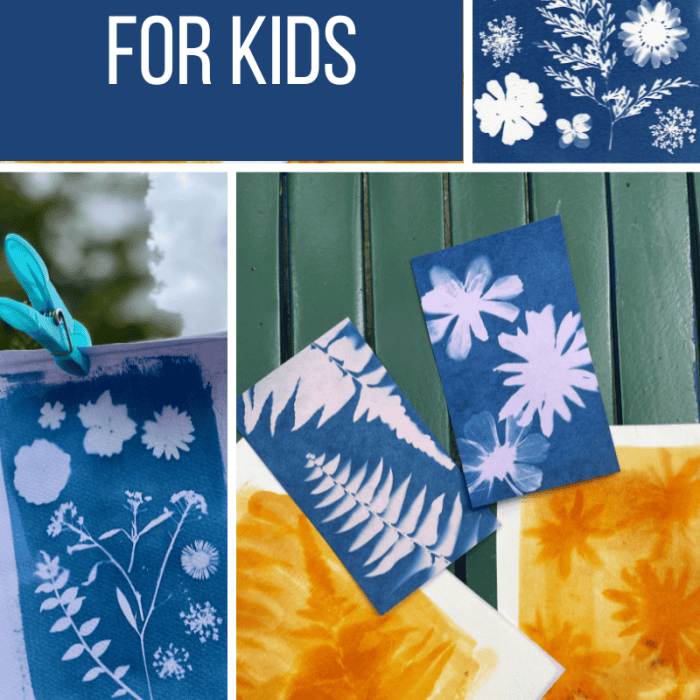
Sun print art is a creative outdoor learning activity that combines art and science. Kids can arrange leaves, flowers, or other natural objects on sun print paper and place it in the sunlight. As the paper reacts to the sun’s UV light, the covered areas stay light while the exposed areas turn blue, creating beautiful nature-inspired prints. It’s a simple way to explore patterns in nature while learning how sunlight can create chemical reactions. For a full tutorial on how to make sun prints, check out my post here.
Outdoor Learning Activities- Stick Structure Building
Building structures with sticks and natural materials turns outdoor play into a hands-on engineering challenge. Kids can stack sticks and logs to build small hideouts, forts, or even fairy houses. This outdoor learning activity encourages creativity, problem-solving, balance, and both fine and gross motor skills while experimenting with simple building and design.
Evening & Night Outdoor Learning Activities
Stargazing
Stargazing introduces kids to the night sky and basic astronomy. On a clear evening, children can look for bright stars and try to identify simple constellations while noticing how the sky changes throughout the night. Tracking constellations over time helps kids understand how the Earth’s movement affects what we see in the sky.
Moon Phase Sketching
Moon phase sketching helps kids observe how the moon changes shape throughout the month. Once or twice a week, children can look at the moon and draw what they see in a notebook. Over time, these sketches allow kids to compare the phases and better understand the moon’s cycle.
Night Sound Observation
Night sound observation encourages kids to notice how the environment changes after dark. Sit quietly outside and listen for sounds like crickets, frogs, owls, or wind in the trees. Comparing these nighttime sounds to what they hear during the day helps kids understand how animal activity changes between day and night.
Forest School Style Outdoor Learning Activities
Shelter Building Challenge
A shelter-building challenge encourages kids to work together to create simple structures using natural materials. Children can gather sticks, branches, leaves, and other materials to design a small shelter or hideout. This outdoor learning activity builds teamwork, creativity, and problem-solving skills while introducing basic survival and engineering concepts.
Knot Tying Practice
Learning how to tie knots is a useful outdoor skill that helps build fine motor coordination and patience. Kids can practice tying simple knots using rope or string while learning how knots are used for camping, building shelters, and securing objects. This hands-on activity strengthens dexterity while teaching practical outdoor skills.
Safe Whittling
With proper supervision and age-appropriate tools, whittling can introduce kids to careful tool use and craftsmanship. Children can practice shaping small sticks or carving simple designs while focusing on control and safety. This activity helps develop hand–eye coordination, patience, and respect for tools.
Map Making from Memory
Map-making from memory encourages kids to think about the spaces around them in a new way. After exploring an area like a backyard, park, or trail, children can draw a map showing the features they remember, such as trees, paths, rocks, or water. This activity builds spatial awareness while helping kids practice observation and recall skills.

Leave a Reply